Build a Bedtime Routine with the Better Sleep Toolkit

Build a Calmer Bedtime Routine with the Better Sleep Toolkit
A bedtime routine does not have to be elaborate to be useful. A consistent target bedtime, a little time to wind down, and a comfortable setting can give your evening more structure without turning sleep into another task to perfect.
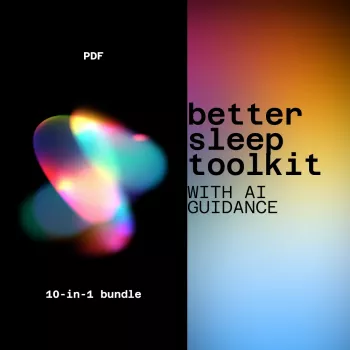
Our Better Sleep Toolkit with AI Guidance is a 10-in-1 option for exploring AI-guided support for sleep improvement and routines. If you would like a more structured approach, it may be worth considering alongside the simple habits you can practice on your own. We recommend starting with a manageable goal and giving yourself room to adjust.
Where the toolkit fits in a sleep routine
Think about the part of your evening that feels hardest to manage. Maybe your bedtime changes from night to night, or you finish the day without a clear transition away from work. Choosing one area to focus on can make a routine feel more approachable.
For example, you could aim to begin winding down at roughly the same time each evening. Or, if your schedule varies, you might focus on a short sequence of relaxing activities that you can repeat whenever bedtime arrives. AI guidance can support your planning as you explore what fits your life; it does not guarantee a particular result.
The Better Sleep Toolkit with AI Guidance is in stock at $412.99 USD. Before purchasing, review the product listing and decide whether structured, AI-guided routine support is worth the price for you.
Make a simple evening plan
Start by choosing a target bedtime that works with the time you need to wake up and the demands of your schedule. Then work backward to reserve a realistic wind-down period. If an hour feels out of reach, start with 15 or 20 minutes rather than abandoning the idea altogether.
The following table is an illustration of a routine you can adapt, not a description of features included in the toolkit.
| When | Action | Purpose |
|---|---|---|
| About an hour before bed | Set aside work and plan for tomorrow | Reduce last-minute tasks |
| 30 minutes before bed | Choose a quiet, relaxing activity | Create a transition toward sleep |
| At bedtime | Keep the bedroom comfortable and quiet | Support a sleep-friendly setting |
Your quiet activity might be reading a few pages, listening to calming music, or simply taking a few minutes away from your to-do list. Choose something you find relaxing, and make it easy to begin. If you share your space, a conversation about noise or lighting may help you find an arrangement that works for everyone.
Try changing one habit at a time. For instance, set aside work before introducing a new evening activity. Once that feels manageable, decide whether another adjustment would be useful. The National Heart, Lung, and Blood Institute’s healthy sleep habits offer more ideas for creating a sleep-friendly routine and environment.
Use guidance without chasing a perfect night
It can help to notice patterns without judging every night. For a couple of weeks, jot down your approximate bedtime, wake time, and how rested you feel. You can also note an occasional schedule change that seems relevant. Keep the record brief enough that it does not become another source of pressure.
Look for trends over time rather than drawing conclusions from a single entry. If a later work commitment repeatedly pushes your wind-down period aside, you might move one preparation task earlier in the day. If your plan feels too ambitious, shorten it. Small adjustments give you a chance to see what is practical before you change anything else.
AI guidance can help you organize ideas and plan a routine, but it cannot diagnose a sleep condition or replace professional care. If you have persistent sleep difficulties or concerning symptoms, speak with a healthcare professional. You can also consult the CDC’s overview of sleep for general information about sleep health.
Consider the toolkit for your routine
Before you buy, consider how much structure you want and whether you are likely to use AI-guided support as part of your routine. At $412.99, the toolkit is a meaningful purchase, so weigh its price against your budget and the value you place on that kind of support. Review the purchase terms and any product details that matter to your decision.
Planning for tomorrow can also mean preparing for a trip. If travel budgeting is on your list, our Ultimate AI Toolkit to Compare Vacation Costs is a separate, in-stock option at $437.99 USD. It is intended for travel cost comparison, not sleep support, so consider it only if that is a separate need you want to address.
Whatever you choose, give your routine time to fit into your real life. You do not need to overhaul every evening at once. When you are ready to consider structured support, explore our Better Sleep Toolkit with AI Guidance and decide whether it belongs in your plan.
FAQ
What is the Better Sleep Toolkit with AI Guidance?
It is a 10-in-1 toolkit positioned around AI guidance for sleep improvement and routines.
Can AI guidance replace medical advice for sleep problems?
No. AI guidance may help with routine planning, but persistent sleep difficulties or concerning symptoms warrant a conversation with a healthcare professional.
How should I start building a bedtime routine?
Choose a consistent target bedtime, set aside a realistic wind-down period, and adjust gradually based on what works for your schedule.











Leave a comment